Thursday, May 7, 2020

Dead: D.W.I. - Driver Who’s Indiscrete by L.A. Preschel (Part 1)

This is a work of fiction. Names, characters, businesses, places, events, locales, and incidents are either the products of the author’s imagination or used in a fictitious manner. Any resemblance to actual persons, living or dead, or actual events or circumstances is purely coincidental. 
* Alert, this is not your father’s hard boiled mystery; it rates R for content, concepts, occupations and language - banal and crude. I’d advise it is for mature adult readers.


Dead: D.W.I. - Driver Who’s Indiscrete

by L.A. Preschel 

The NYPD made a mistake when they pinned a gold detective’s shield on my chest and promoted me to the homicide division. The error wasn’t in recognizing my talent. Immediately, I was the best detective at the table. Their mistake: leaving the M.B.C. (the Misogynist Boys Club) unprotected from me, a TNG (Take No Guff) woman on a constant mission of male-attitude adjustment.
At my first morning conference, Detective Hoguard, who never gave me any respect while I worked general detail, says, “Hey girlie, the black coffee mug with the gold writing, ‘World’s Greatest Dad’ is mine. I take my coffee black, and prefer chocolate-glazed donuts. In the box on the counter.” He sat up from writing his report and pointed to the coffee maker.
My answer, “Thanks, but no thanks, I brought my mug, and I don’t go for donuts.”
“No, the machine’s in the corner. Make it two-thirds full, so your delicate fingers don’t spill it.” He continues writing his report. “Then bring it right here, girl.” He pats the table.
A detective’s gotta make an impression, so I gather his cup and fill it to the brim. Then I walk it to his side. Four pairs of male eyes observe from around the six by eight foot wood table. They smirk. Hoguard is the only one sitting. 
I deliver the java, wearing an innocent smile, and then deliberately dump the hot coffee over his crotch and the report. “Oops. Sorr-eee,” I sing.
Hoguard erupts, knocking over his chair. “What the hell? I said be careful woman!”
I gently place the empty cup on the soggy paperwork. “Wanted it here, right?” I stare into his angry eyes, without flinching. “It is a little less than half full now. No worries ’bout spilling anymore.”
Hoguard huffs, tugging his pants as they cling to his thighs, but remains speechless.
I pat his shoulder. “The way my world works, Hogie, if you want it done right, do it yourself.” I walk around and sit on the dry side of the homicide work table. “The paper towels are between the coffee machine and the donuts. It’s called wiping up after yourself.”
While several detectives smother laughter, Hoguard stomps over to retrieve the towels. His pants from his knees to the belt loops are drenched, like a failed potty trained child who had an accident.
Good morning homicide bureau. I’m your newest member Samantha Cochran.
I am the first woman admitted to the team. I work with seven old-time male detectives, who sit in their Neanderthal man-cave of an office, thinking my job description reads: secretary, follow orders, keep my valueless theories to myself, and shake my cleavage, while I hustle my bustle. Don’t talk, you’ll only be annoying. I’m not guessing, I’ve been told each of those suggestions to my face. Each author was dead serious, not pranking.
I do not play that way; never did, never will. An armed independent thinking woman, I know how to express myself, and be heard even over male voices.
Life’s a bitch, filled with disappointments, deal with it, ‘cause boys, I’m no one’s slave.
Detective Frank Ryan is my first partner, although associate is a more accurate term. His attitude prevents partnership. At 38 years old, twice married and twice divorced, he actively stalks personal servant number three. His Adonis build and blue eyes come with Paleolithic attitudes. He expounds to me as he drives back to the precinct house after I worked my first crime scene as a homicide detective. “Let me tell how it is in this world, Wonder Woman.” He gives me a glance and returns his view to the road. “Frivolous and incompetent, women are tolerable only because of their inherent ability to satisfy male wishes and needs, like Aladdin’s genie.” His eyebrows question my comprehension of his meaning. “It’s that simple. okay? Learn to stay out of my way, and I’ll take you to the top.”
“Learn this.” I flag him my raised middle finger.
He response was a soft chuckle. “Ok, and so it’s on.”
I am not his cup of coffee, and he will never be mine, not even a demitasse.
Each morning he asks, “Girl, how can I make you look good, if you don’t hold up your cute little hind end?” Then he jiggles his Robert-Pattinson-eyebrows at me. “Cover my back now, and later, I’ll cover your —”
“Consume excrement and expire, dumb-ass,” I answer, or words to that effect.
Everyday, we grow less cordial. After each shift, as I ride the subway home, I think how could tomorrow be more bellicose. The next day, surprise, it is.
Four months into our pairing, we are up when a call comes in. A transit bus never made its morning run. They found it in the terminal, with a dead driver behind the wheel. His skull’s contents splattered on the driver’s side window. His company shirt perforated and turned from light blue to dark purple from his blood. His face kissing the steering wheel.
My fifteen-minute ride to the crime scene with Ryan at the wheel is more demoralizing than investigating the murder of a guy whose brains are strawberry yogurt served-on-the-side-view-window of his bus.
Congested traffic causes Ryan to wail like he is giving birth, “Women drivers, jeezes. Look at that one. A gray-haired snail.” He honks the horn and gesticulates.
Granny drives down Seventh Avenue, maintaining her 10 mph, straddling two lanes.
“Honey, police, pick your favorite lane and own it.”
Granny creeps downtown, maintaining a “middle of the road” presence.
At the terminal, the local-beats have taped off the crime scene. They announce to Ryan, with body language meant to exclude me, “The vic’s already in rigor. A human-sized cherry Popsicle, red, rigid and frigid.” The officer makes a grand show of turning to me. “Pixie, even his wild thing.” His ignoramus partner fist bumps him. Then they dance the floss together. 
Childish jerks. Dealing with this constantly is a learned art. I try not to let the term pixie upset me as much as it once did. With blond hair and being just over five feet tall, its use is meant to demean me. 
Am I that threatening to male officers?
Ryan gives them a thumbs up and ducks under the tape onto the bus platform. 
I attempt to follow.
Patrolman Borracho, a wrinkled-faced cop with at least twenty years on the job (half of it cooping in a bar), smiles over a cratered, glowing, globular nose. He blocks my way. “Stop. This is work meant for Police-men.” To emphasize his opposition, his pelvis cruises into my path, like a Chippendale dancer looking for a tip.
“Very funny, move, I’ve got work to do.” I attempt to step around him.
“Pipsqueak woman, where do you think you’re going? I’m controlling the crime scene.” His smirk grows as if he is pranking on a tv show. Alcohol-breath wafts my way.
I allot five minutes per day for male-morons to amuse me and vice versa. Three of those minutes had been wasted on Ryan during the drive. The flossing follies was another minute.
I flash Borracho my badge. “I’m investigating. You are obstructing justice.”
“Got a badge in Crackerjacks?” He remains in my way, while eyeing the floss boys, who snicker at his rolling eyes. Borracho stood between me and the unloading platform number 419 that held the crime scene.
I’m investigating a murder and the good-old boys are giving me crap?
Borracho deepens his voice, “No sightseeing. Stay on your side of the tape. Police-men’s work.” He pointed to Ryan as he enters the bus. “See, not police-girl’s.” He smirks and rolls his eyes at the flossing twins.
I grew up with a cop father, and two brothers, future police-men. At an early age, I became fluent in asshole and all its masculine off-shoots. Not every man or cop speaks it, but this group was learned in the dialect. It’s a language that has no feminine equivalent, but my familial education gives me fluency. I take no shit.
“Patrolman, do your job, sit on your dumb-ass and guard the purdy-yellah tape, but sit down gently the ground is hard, don’t want a concussion.” I re-flash my Gold Shield under his nose. “It’s gold, and I solve cases. Step out of the way, or go to jail.”
“Just havin’ fun, Pixie.” In mock chivalry, he lifts the tape letting me under.
That used up my moron-amusement time, so I ignore his remark, and stomp to the bus.
Ryan stands on the bus’s entrance steps; his outstretched arms hold both railings. Right foot on the top step and his left on the next one down as if he stopped in mid-climb. Is he preventing me from entering, or is he steadying himself? He’s frozen and a little green. With a slight wobble, he blocks my view.
I peer under his arm at the crime scene. The cadaver’s necklace ID card says, Stephon St. James. He sits in the driver’s seat. He leans forward and what is left of his skull rests on the center pad of the steering wheel. The two empty cellphone holders hang from his belt.
Was he on a phone when he bought the farm? Then there is at least one audio witness.
Sixty feet away, in the next bus bay, a few local beats interrogate a sobbing woman in a clean light blue bus driver’s uniform. Maybe because she is heavy-set, they decide to out-number her four to one. They create a half-circle of NYPD, taking turns asking questions, I can’t hear them, but by the look on their collective faces, they aren’t asking for her phone number or a date.
She wails, “No, no, no. Even if he is, I did not do it.”
The wolf pack of officers’s body language makes her their prey. She scurries on the platform trying to peek in the bus through the open doors. The pack corrals her before she travels twenty feet.
The cop in her face says, “You know how he looks, since you did it. Why look now?”
My deduction: the dead man’s significant other, always the first suspect.
Ryan glances her way. “She’s fat.” Then he studies the vic. “He was handsome and fit, like me. He dumped her. Told her here. She killed him. Let’s get her.” He pushes past me.
Ryan competing in word problem solving with a second grader is a toss up. Maybe neither gets it right the first time.
I’ve told Ryan jumping to convictions without getting evidence first leads to landing on conclusions as strong as balsa wood. The landing’s aftermath could hurt you and/or your reputation.
While Ryan catechizes the lady on the platform, I find the victim’s two phones hiding under his butt. Wearing latex gloves, I pry them free and out from under. Early rigor plus dependent edema (swelling) makes the phone leave a mold in his butt. They’ve been there since the murder.
Phone number one’s battery is dead as if it was never turned off. That suggests he was on it right before he was shot and hid it under himself while it was on. Phone number two’s battery has a ten-percent charge. It is off. I turn it on. Password protected, useless for now. I drop them into separate plastic bags and hand the bags to Sid the CID man. “Sid, you know the deal. Last caller, each phone?” I like CID Sid. His unisex vision sees me as a detective, without the female modifier.
“Sammie.” He pulls from his large black bag, an evidence ziplock with a gun inside. “Here’s a weapon, caliber appears right. A guy, “E.Z.” Eddie Smith, found it in the trash. He works in bus maintenance. The office and lockers are on the second floor. The vic caught six 9-millimeters. Overkill?”
“Passion.” I inspect the weapon inside the evidence bag. I crack the seal. The acrid bite of burnt powder floats out. “Browning Hi-powered 9 mm pack enough punch to have painted that window with blood and brains.” I give the closed evidence bag back.
The woman that Ryan interrogates shrieks, “No! We weren’t fully broked-up. Ronella still loved him. Still do.”
Ryan grabs her by both shoulders setting up his shake ’em-up-baby maneuver. I’ve seen it before. If he weren’t a cop, it would be called assault. The cops that had circled the woman, step back, as if clearing space. There is enough room to open up a ten foot circle. No one says, “Stop.”
I jump down the bus’s stairs and run to intervene. Ryan only uses this maneuver on female suspects. Men fight back, so Ryan uses guns on them. Ryan’s Revolver Roulette is his preferred modus operandi for males. The ACLU will not certify either technique, but Ryan reckons what they don’t know can’t… however, a good defense attorney would… have to move to stop this or we’ll both be in hot water.
Ronella is larger than Ryan usually shakes, and his first attempt is weak. I arrive as he is leaning her back for his second try. He widens his stance for leverage as she outweighs him by forty pounds. He takes in a deep breath. “Lady gimme the truth, or…”
“Ryan wait.” I grab her left shoulder. “This cannot end well, partner.”
He squints at me with one eye closed. “Wonder Woman, I got this. Let go.” He slowly, gently leans his victim back into the pre-snap position; his arms extended. You could hear a tire iron drop. A bus arrives three dock-bays down as I continue to prevent his next mistake.
The look in the woman’s eyes is pure terror. “What you be plannin’ to do to Ronella?” However, she is frozen and does not resist.
He’s planning to snap your neck like a whip.
“No, stop.” I pull one of his hands off her. “Let go. Calm down.”
“Wonder Woman, this girl looks faint.” Ryan winks at the four male officers watching us. “You saw it. She practically fell over backwards. I saved her. I’m a hero.” His free hand thumps his chest. “Here-oh.”
The woman stares to her shoes, and shuffles back a step, scraping the platform.
Ryan follows, maintaining his other arm’s grip on her shoulder. “We’re not finished."
“Leave me alone.” She shrugs off his arm. “Ronella is just fine. You may be a cop, but you has no right. Nope, not one reason in hell of touching me that way.”
“Ronella is it? Come over here please.” I usher her ten feet away.
“Nancy Drew derails the lead detective’s interrogation.” Ryan stomps over to the four cops, who are joined by the Flossie boys. Ryan expounds, “Another three minutes, I’d have a confession,” Ryan’s stage whisper delights his audience.
They offer smug confirmatory nods, huddling like pigeons on a apartment building’s ledge.
One pats Ryan’s back. “Policewomen so softhearted, workin’ with one, how’d ya get anything done?”
I walk Ronella farther away. “You know the deceased? How?”
“He is, or was my boyfriend. I planned to break it off. I never hadda chance. That liar cop, he say the evidence points to me. I didn’t kill Stephon. I couldn’t. I didn’t.” Ronella pulls a tissue from her purse. She covers the corners of both eyes and presses. “I loves him."
“I believe you. Why’d you want to break it off?”
“Why’d I tell sister-fuzz?” She aggressively eyeballs me, in a way, she never do to a mister-fuzz. “You a woman on donut patrol?” Her face puckers. “I wants me a lawyer. Not saying no more, ’cept I did not shoot him nor nobody ever. I don’t own a gun.”
“She knew he was shot. I never told her.” Ryan has snuck back. “The guilty demand a lawyer.”
“Yes you did. You told me, whens you asked if I owned me a gun,” Ronella wails. “Cops. Can trust none of you.”
I walk her from Ryan. “If you can’t afford an attorney, here’s the number of the public defenders office.” I hand her a card. “Come to the homicide department tomorrow around noon. I’ll take your statement. Bring counsel. Ask for me.” I hand her my card, with the address. “But if you don’t show, I will hunt you down. Your employer has your home address.”
She takes a calming breath. “I don’t need this. It was over, but...” She bites her lip.
“Then we’ll prove you’re innocent.” I offer a half-hearted smile. “My job is to get justice and find his killer. If it is not you, you have no worries. I trust you.”
“My ass you do.” Her face darkens with rage. She steps to me, and I appreciate her size as she towers over me, but I stand my ground. “I’m not no donkey,” her scolding finger is in my face, but she doesn’t make contact, so I let her rant. “You won’t pin this tale of murder on my ass. I can go now?”
I point away from where Ryan is bullshitting with a gaggle of cops. “Yes you can.”
She escapes through the silver and glass door to platform 412 and into the terminal itself. 
Narcissistic Ryan holds court so intensely, he’s too busy to notice her exit.
The bus terminal is more a warehouse than a way station. The open maze of roadways stretches over three floors, winding through glassed-in waiting areas with wood benches and silver posts to lean on while a passenger marks time. The city’s perpetual budge crisis leaves no money to clean the terminal’s windows. The ventilation system can’t keep up with the traffic, so the soot-filled roadways live in the stagnant murk of bus exhaust.
I walk to and re-enter the bus, to take another look at the crime scene. The body has been removed. You can appreciate the blood splatter better. It’s spray-painted everywhere but the seat the victim sat in. The rest of the area looks routine with his personal bag stowed under his seat. I crouch down to see what else might be in his floor cubbie and… wait one minute. Something yellow lies on the floor under the gas pedal. You can only see it from down here. Being tiny has its purposes. Using gloves, I deposit the tag of rubber in an evidence bag.
I pull out a panatela from the box, since I cannot smoke it here, I chew on it. Need to think. Need to relax. That yellow rubber tag bugs me. Drivers don’t usually wear rubber gloves. I walk to the second floor locker rooms. E.Z. Eddie Smith might still be around. No one has bothered to talk to him. Ryan still carouses on level three. 
My cigar is my carousing. She promotes more valid conclusions than my partner. Plus, I don’t have the same sense of humor as those men. What’s funny about a murder? How do you get cozy where someone was just killed? Do your job, find the killer.
I come across E.Z. Eddie Smith exiting the locker room, in civilian clothes that appear to be from the 14th Street mission. His Mets t-shirt says “E.Z.” on the back. He opens a pack of blue rubber work gloves. He hangs them on a cart labeled, “E.Z.’s Wheels.” It’s a clean up cart the maintenance people keep supplies on, so that they can be efficient, when they prepare the buses for the next day. E.Z. locks his cart with a chain to the thick brown metal beam that helps to support the whole building. He looks at the cart and smiles. “That be good now.”
I introduce my badge and donate my card to him. “Everybody has their own personalized cleaning cart?” I tap the side of his.
“No.” He adjusts the gloves on the cart. “There, that be better and don’t be messin’ with my stuff. I lock it up, so no body do.” He gives an effortless laugh, and moves his cart away from me. “My title: senior maintenance engineer.” He flashes a gold front tooth when he smiles. He hands me a card. “Long-jet-it-tee. I be the shift boss.” He nods slowly, confirming that fact. “Yup, the king rates special privileges.” He finishes tucking in his Mets t-shirt. His waist looks like its twenty-six inches around. 
I’m jealous of that.
His smile widens, but his eyes are Antarctica cold. E.Z Eddie is as calm as an Asian monk  praying while on Quaaludes. He looks older than his stated age, 45, but has a rubber face, a classic Clark Gable mustache, and that easy smile. His eyes are tired slits until he speaks and then they explode wide, as words flow from them like beer from a tap at a frat party. If he were not called E.Z., I would think his chatter is from nerves. However, he is smooth. He could sell heating units in the Sahara. He stands shielding his cleaning cart from me. It goes beyond protective to possessive.
“Is that cart so special?”
“What’s mine is mine. No one messes with it.” He tilts his head, laughs loudly, and offers a quirky smile. “I claims it. No one else but me touches it. Till I’m done. Then you can have it. See, that’s how my world works.” He snorts and steps aside. “Look all you wants, but no touchin’. I’m funny that way. Always have been and always will be.” His eyes never laugh. “Smart peoples stays ’way, ’cause we don’t need us no drama.”
I walk around the cart. “No drama offered. Just wants some simple answers.” His cart doesn’t look different from the other seven parked nearby it, except half the others have blue gloves and half have yellow hanging on them.
I receive a brusque purse-lipped nod. “Okay, but I’m off duty. Let’s us be quick.”
“Where did you actually find the weapon last night.” I pull my index cards from my jeans’s back pocket so I can take notes. Cards are painless to rearrange when I change how I’m thinking.
“My job be to clean buses on the first floor. I find that gun up on three. We done? ’Cause I got me no other answers for you.” He walks past me. “Don’t clean no buses on three.” He tries to herd me away from his cart. “Bye now,” Having moved me twenty feet from his cart, he circles past me and starts to leave.
I follow as he leaves to the stairs down to the street.
He turns, “Don’t be following me. I’m off.”
“To where?” I ask.
“Wife’s waiting. Gotta drive us home. She be mean, if-in she wait too much for my ride. Lucky for her, her old man is the easy one.” He gives me that smile. It’s got mischief in it, even while he taps his foot. “Gotta go. So come or don’t.” He resumes walking.
 “So you don’t mind if I walk with you?”
He shrugs. “Nope. Free country. Can’t stop you. See? Easy.”
We walk. “How did you find the gun?”
He talks without looking at me, as if focused on the stairs. “Drop my wife off at 24 Hour Donuts and come here. She works night shift. I clean the buses. thirty of ’em most nights. At the end of my shift, I goes to dump the trash in the bins on the third floor. This morning, I sees alotta commotions here, but I don’t give it no never-mind ‘cause the bins be far away from it. I minds my business. Then I sees a hand cannon trashed by someone. It be lyin’ on top of some newspapers. Right there on top, like some turtle sunnin’ itself on a log. I knows, even wearing my gloves, don’t touch it. Don’t want my fingerprints on it. I calls one of them boys in blue from over on the platform. I be done with it.”
I’d been up to look at the bin that morning. The roof’s atrium glass window let in enough light to see in. There were newspapers right on top, as E.Z. had said. “Never touched it?”
“No ma’am.” 
“You did not hear any shots?”
“Nope. I works two floors down on level one. Buses comin’ in and out. I hear ‘em, but no guns, nope. Don’t needs level three ‘cept to dump my work in the bins at the end of the night. That’s what I know.” He gave a firm nod.
“See anyone suspicious or a person you did not recognize? On the platform or hanging around while you cleaned up?”  
“Always people I don’t know coming off those buses. Lotta people.”
I’ve perfected the art of writing on index cards while walking. It’s become a job requirement. When I glance up, his facial expression doesn’t change. His voice sounds strong and sure. I ask, “No one running away?”
“Nope, gotta go. Don’t need an unhappy wife.”

*      *      *

End of Part 1


Wednesday, May 6, 2020

Funny How Things Happen Sometimes

Today, I finished reviewing my short story Dead: D.W.I. Driver Who's Indiscrete. It is a Samantha Cochran story and a prequel to the Sam-Cat mystery series, as Sam is still on the police force for this murder mystery. The work I have just completed, made me ruminate about how over five years ago, I started to write a hard boiled, female detective series. I have written several short stories and 1 full manuscript with another manuscript a completed rough draft. I present my thought patterns for review.

When I first thought about writing a hard boiled detective mystery, I initially decided that I wanted to change the paradigm of a lone male wolf detective, In particular, I wanted to escape the cliche of a jaded world-weary cigarette-smoking stubbled-face stoic with a weapon, who lives alone and does not want to have a friend, because friend would be too much effort and impose on his lifestyle.

Also, I believe in today's society, a female is able to be as good a detective as any male. I believe that a female can do most anything as well as a man, as evidence I offer the U.S. Woman's National Soccer team which has had more world wide success than the men's. In support of that cause, I have written a female detective and given her a motive for her life style, attitude and her adventure in the life of a private eye. Giving her enthusiasm and emotions, as well as determination to prove that a woman can function as a detective, because that is what she wants to do. Dorothy Kenyon when she was a teenager (in the early twentieth century), asked her father who was a lawyer., if a woman could. become one. His answer was classic, "Why not?" I feel the same way.

I quickly decided that the cliche of a motherless daughter raised in an all male family would work as her backstory, even if it sounded clichic. I wanted her to have valid reason for being her choice of becoming a private investigator. So she grew to be a woman who wanted to be a cop, like all the males in her family. However, the glass ceiling and the male wall of silence would force her to become a private eye. She met the level of anti-feminism that existed (?still exists?) in the male oriented world like law enforcement. I cannot state that today's police anywhere act in this fashion. I am writing fiction, and my fictitious world is not completely irrelevant (has some relationship) to the real world.

Harassment, bias, and a glass ceiling remain present today, and are documented in our recent past - Matt Lauer, Andy Lack, and Harvey Weinstein although not in law enforcement but... The military just reported sexual assaults against female soldiers dropped 3% in 2019. This was a smaller percentage drop than 2018, but in 2019 just under 1,400 assaults were reported. This does not included verbal harassment and intimidation. It also excludes those assaults that went unreported. This adds credence to my artistic concept.

So to those who say, my stories seem exaggerated, I say, in the male world of law enforcement and military forces, women still have to tread lightly. I also think that if you read the newspaper, you will find Sam's motivation to leave the police force rings true. So maybe my presentation is not so much cliche, but fictitious fact, a form of docu-fiction. However, all this first came to be in my mind and once it was on paper, the news of the world made my logic more reasonable.

I needed someone to employ Sam to do the detective work. This added the opportunity to have a second woman - a lawyer - assume an important role in the story. So, I have a narrator who is a female hard boiled detective and a side kick who is a lawyer as well as rich. My side kick is name Allyson Catherine Worthington. She is the daughter of an international industrial magnate. We added to the fun of conflict by making Sam lower middle class economically as might be expected since her father was the sole support of his family, which include Sam plus two brothers. Allyson goes by her middle name, Catherine, and has her own angst that even money cannot repair. This sets up basic class conflict between them. They are both loners, who have suffered a close and extreme family loss.

The short story offered here at this time, is before Sam leaves the police force and before Catherine and she join forces. However, what I find most interesting, from an author's stand point, is that while I did not try to update or re-establish in a female world the Nero-Archie-relationship, and the two women, Sam and Cat, while less cordial than Nero and Archie, still possess some of the tradings of my early exposure to mystery writing.  I did re-create similarities to my old favorite, Nero Wolfe on purpose, but the mind will have what the mind wants.

I expect in the next two days, I will publish on this blog the first installment of Dead: D.W.I. Driver Who's Indiscrete.

L.A. Preschel


Monday, May 4, 2020

It all started with Rex Stout and Nero Wolfe for me - Now I'm writing the Sam-Cat Mystery Series

It all started with Rex Stout and Nero Wolfe for me; the art of loving mysteries and then mystery writing. 

It turned much darker after Hammett, Chandler & Caine.

The first mystery novel my mother let me read (got me to read - there is some controversy as to the accuracy of these facts) was Nero Wolfe. As a child, I did not sit much - too busy playing anything with a ball. However, between the obese, orchid-growing, genius detective; his townhouse; and his chef Fritz, not to mention his go-fer--body guard-detective Archie Goodwin, I was hooked. I read multiple Rex Stout mysteries until I discovered the Maltese Falcon via the movies first, and later Dashiell Hammett novels entered my field of vision. Sam Spade and then Nick and Nora held my interest when I was in high school and early during my college years. Although the married couple seemed lame, Spade was the entree of my reading meal. The Man and wife were at most an amuse-bouche . I also became acquainted with Raymond Chandler and Phillip Marlowe. He ran to the top of my reading list like Usain Bolt in a sprint.
Interesting to note that the eighth Marlow mystery was completed posthumously by Robert Parker who’s Spencer also held my interest for a while in my forties. 

With further reading I can upon the third in the hard boiled trinity, James Cain. Although I did my due diligence, I never loved The Postman Always Rings Twice or Double Indemnity. His style just lost my interest. I never read Mildred Pierce, and maybe that would have change my mind. Never even watched the movie, oh well.

Since I have retired from orthopedic surgery, and have more time to read for pleasure, Walter Mosley and Lee Childs have gotten read, but they too have passed to the wayside. I even thought about reading Earle Stanley Gardner’s Perry Mason mysteries, but I am afraid his early fifties style will put me off now. However, I have incorporated court room drama in both novels in my Sam-Cat series so far. 

Over seven years ago, I wrote a Jim Butcher-esque mystery and had several agents give it a full read, I thought, I was on my way to getting published. However, my style for that paranormal murder mystery mixed romance and humor with the murders. This apparently put off the agents, whose comments were similar, “we are not sure where on the shelf this book would be placed, mystery, humor, paranormal. Three agents had the same opinion, so maybe I should believe the writing was up to par and not the cause of their refusal to represent me. With their comments echoing in my brain, I decided to write a hard boiled mystery ala the ones I loved in college and high school. So here we are, however, I did not want to copy the old masters as if I were re-writing that era. Life and the world have changed and today's audience wants more of today's world. I may be mistaken as their is a market for historical mysteries, but they are not my stein of beer. I would find my style of mystery writing and try very hard to stay in my lane, whether the lines on the road were broken or solid where I wrote. (An activity that seems impossible for my creative mind. Maybe all those years following the rules to reach a diagnosis and treatment made me want to liberate my efforts when no one will suffer from my deviations.)

My mind returned to the type of stories I read in high school and college. I loved the hard boilers, that TNS detective who was not afraid to take one on the chin so that his client gets justice, or even paybacks. However, it seemed that during the 1930’s and 1940’s the female side of the equation - the Lillian Hellmans / Mata Huri - type of the detective were ignored as subject matter. Feminism was not even a egg waiting to be sat on, much less hatched. Woman were an after thought in most plots unless they were the iconic Eve seducing men into E-VIL.

Remember Lillian? She wrote but she also was a spy leading up to world war ii. If her memoirs are correct, and Joan McCarthy had her doubts, Lillian was a Jewish woman who spied on the Nazi for America during the 1930’s. Pretty brave, and pretty tough. We are talking, she did the same work as that which made James Bond famous (possibly, her memoirs were as fictional as Ian Fleming’s). So I asked myself, where are the Mata Hari stories about the women who spied in that time. They do not seem to exist. If they do, they are called into doubt by many of the people of that era. I wanted to up-date the plot lines and write a female protagonist, and maybe have her overcome the cultural attitudes that often still restrain females in the work place even today.

So in my perverse manner, I decided to write a character who was a hard as nails female detective. She became Samantha (Sam) Cochran. (“Sam” ? a subconscious tribute to Mr. Hammett?) I wanted to twist the paradigm and make my detective a feminist who does not care about advancing the woman’s cause, because she is too involved advancing herself. Confident in her ability to succeed, she is a model, not a suffragette. And it seems Rex Stout wanted to influence me as well, because in my Sam-Cat novels, Sam works for a very rich lawyer who lives in a Fifth Avenue townhouse. A writer’s mind lives below the surface all the time. Innuendoes are our business. Old influences die hard, if they die at all. The court scenes that end the novels also draw on Earle Stanley Gardner. As an author, you are what you read.

Sam’s mother died during her birth and she was raised by her father a beat cop from Queens and was the youngest of three children. She has two older brothers who are both cops. Her father did not know how to raise a girl and could not be bothered learning. She was raised as his youngest son. She became a cop. The short story that I will be posting on this site in the very near future is a prelude to Identically Dead, the first novel in the Sam-Cat series. In the short story, Sam is still on the police force and solves her first case as a gold shield homicide detective. She has to manage herself with the boys, as she is the only and the first woman on the homicide squad. The male officers do not plan to make her life easy. 

An after thought; I think Sam takes some of her spirit ironically from Mary McCarthy, who would hardly be called Lillian Hellman’s friend. In fact, Nora Ephron’s play, Imaginary Friends is based on their feud, which ended with Hellman suing McCarthy for liable. And, as if written to suit dramatic fiction, the trial concluded shortly after Lillian Hellman died. Life is so complex, sometimes we cannot match its drama no matter how much we overwrite our plots.

Part two of the after thought: in my retirement, I have had time to read James Lee Burke, and his style of writing and his presentation of the story make me so envious. He is truly a Grand Master. However, I would not dare call his works hard boiled, they are literary pictures of a mystery. I strive to add a modicum of his descriptive atmospheric touch to my writing. I am sure I fail in this valiant effort. I probably should not try to mix his style into mine, because once again, I will leave myself no single place on the bookstore’s shelf. If that is so, then so be it, because I am enjoying my writing. I hope you will enjoy it too. You emulate who you admire in life, and James Lee Burke is the top of the line for me.


L.A. Preschel.

Monday, April 13, 2020

Noir Mysteries are based on: dark secrets

I initiated this draft on noir mysteries before the Coronavirus (COVID-19) changed the landscape, however, what could be more noir than a disease that spreads with little interpersonal contact needed, and is more deadly than its cousins the flu. Better yet, or worse as is the real picture, we don't even have good test to tell whether you have it or not, but we will have a test that can tell us if you did have it and have antibodies to the virus. That might be ready in a month or two. Until we know who has what, and how severely, we are in the most noir mystery ever told.
If I wrote something approximating this on paper, people would call it unbelievable.

Noir Mysteries are based on: dark secrets. If this disease is not a dark secret, I don't know what is.
Is life today in the United States an unedited noir manuscript?
Is our life {global warming, trade wars, police abusing the public and the public abusing the police, politicians lying and both sides of the congressional aisle refusing to possess an open mind to objectively study the facts. And the disease shutting down the economy while the congress is offering money to small businesses and people who aren't working so that the world can just survive.) My I could never conceive of something this dark.

Our physicians are the modern day Sam Spades or Phillip Marlows fighting darkness with weapons that are insufficient and overwhelm. I hope the ending of this novel is happier than most noirs that just seem to settle for continued existence without any significant improvement.

Noir is based on dark deep secrets, and today we have more convoluted hidden secrets in every aspect of life than ever before.

This is what I wrote late last year when I stopped because it depressed me too much. How much of it still applies to our existence.


The darker the secret, the greater the need for illumination.
There are dark secrets that our country has hidden in the depths of ...
This is not limited to fiction, but our reality every day.
Our national darkness, needs illumination, by a neutral, non-biased party.
Politics must be set aside and answers based in fact, not opinion must be found.
At this point in time, I do not believe that such a neutral person is an endangered species, rather they are extinct, and a new genetic mutation will be required to create our referee.
Human bias is universally present, a global condition, similar to Global Warming.
Our future existence depends on curing both conditions in an urgent manner.

-- Samatha Cochran private investigator. 12 December 2019

Wednesday, December 18, 2019

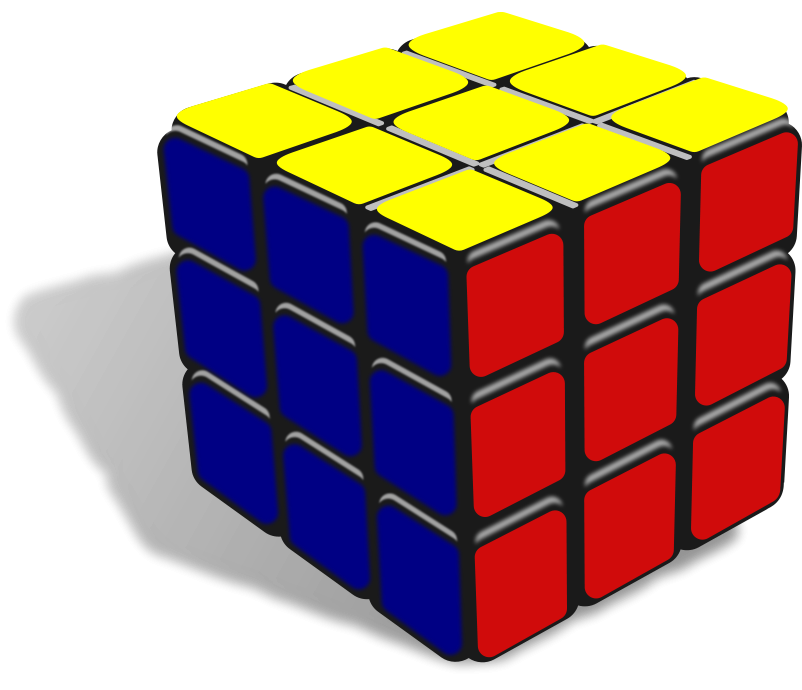
I like my mystery like a Rubik's Cube

I like my mystery like a Rubik's cube


For those of you who missed the decade between 1975 and 1985, the Rubik's Cube is a 3-D combination puzzle and toy. Ernő Rubik invented in 1974. He was an Hungarian sculptor and professor of architecture. Originally its name was "the Magic Cube." Multiple squares in different colors line each side and move independently of each other. Rows can be moved as a unit in the north-south direction or the east-west direction. By twisting and spinning the rows, using differing axes, you can create a cube that has only a single color of squares on each side. They have invented computer algorithms to figure out the solving process. Of course, that is cheating the same way, reading the last chapter of a mystery instead of starting at the beginning of the book and reading straight through to the end is.

As in my favorite mysteries, the solution should be hard to reach, but it should in retrospect be logical and almost obvious when all the facts are considered from the right point of view - via the retrospectoscope. Every pertinent fact must ring true. They must fit like jigsaw puzzle pieces.

Red herrings viewed from the book's conclusion should have been discountable, but somehow are not dismissed immediately by the reader. The process of solving must be not so hard as to discourage the reader from trying, and yet, not so easy so that the reader needs no effort to reach the right conclusion. Certainly, the final answer of whodunnit, should not be so obvious as to make the story unable to hold the reader's interest, but at the finish, the reasoning and logic must stand out like a single color on each side of the Rubik's Cube.

I love colorful characters. I love wonderful setting that bring me into the picture to stand next to the detective, but most of all, I want to struggle to figure out who killed the victim, so that I have a feeling of accomplishment when I reach the conclusion. I want lots of pieces that I must move around and align just right so that I can conclude who dunnit.

If I accuse the wrong character of being the murderer, that is better than if I know who the killer is before the middle of the book. Those type of manuscripts fit into the genre of suspense, where we know who is the bad guy, but we don't know if he will be caught. I'm a mystery fan, not suspense.

Think about it. Suspense by nature is more about the procedural part of crime apprehension, and mysteries were more about the mental aspects - deducing from facts, and using logic to reach the conclusion. Often they have physical apprehension, but just knowing who the killer is represents the goal in murder mysteries.

In a good mystery, like the Rubik's cube, all the facts are on the table before the end of the book, and we, the readers, have the opportunity to succeed, but it takes perseverance and brain power to reach the goal of who, how and why - to align all the colors on their side.

-- L.A. Preschel


The art work for this essay was taken from non-copyright Rubix Cube Clip Art.

Monday, December 9, 2019

NOIR AT THE BAR

Last Night At The Shade Bar - 241 Sullivan Street.

Noir at the Bar is a group of writers of the noir genre who get together for readings every few months. It is held at the Shade Bar on the corner of West Third Street & Sullivan Street in Greenwich village. It is a short walk from the A train, which my character Sam Cochran takes home to Pops in Queens, therefore our transport via subway to the bar was well known to me. Sunday, December 8th was pre-Hanukkah, and the middle of the pre-Chrismas shopping season, so the subway was full of characters at 5 p.m. I love riding the subway, because I can populate my novels with its inhabitants. Of course, it is just my imagination as to their personalities, but the people start the wheels turning. Similar to a farmer harvesting crops. The subways grow character like weeds in your organic vegetable garden.

The bar itself is about fifty feet by thirty feet, with two walls facing the street - I did say it was on a corner - large windows allow viewing of the passing parade of pedestrians. However, even with the street light fully on, the room is darker than a vampire's lair at midnight. The wattage used to illuminate the joint, can't run more than a nickel a night on the electric bill. Or maybe they have four squirrels running on wheels to generate the power. The brown time ceiling made of molded press pattern squares is a left over from when speak-easies existed. The walls are unfinished wood and each has at least one mirror on it. The plain wood tables rock when you lean on them and the kitchen is behind a red curtain, which I did not try to peek behind. In a place like this, never look where they cook the food you eat. What you don't know probably won't kill you, but what you do know, will steal away your appetite. That is my general rule, and I have no idea if it applies to Shade bar, however, the people next to me were having enchilada like food and it looked good. You never know.

The actual bar seats about ten people and takes a right turn to run parallel to the short wall of the room. Behind the patrons seated at the short leg of the bar is one of the two windows. The long leg of the bar runs about fifteen feet, and behind it is a glass lit four-tiered set of shelves with assorted whiskeys. Some of the bottles glow because of the lighting from underneath the shelving is transmitted by their contents. They look like glow-worms in the darkened room. Think Fernando's hideaway and if you are old enough to remember that song, you are in my age group. The corner of the bar has several taps, but none of them sprout stouts or any dark beer, so they are worthless to me. Would not even make the bar tender, who sports two nasal piercing, waste the energy to push a handle to receive a glass of the amber stuff that passes for beer. (My wife compared her to Gilda Radner cause of her two pig-tail hair style.) Guinness in a bottle? Not worth the effort to pull the cap, I can wait to get home for some real bottled dark brew or even some Port. Life has taught me patience. I'll wait the three to four hours to get home before I would ruin my taste buds on the watery bubbles that pass for IPA beer. My beer is as twilight in a cave.

Hey if I'm at a noir author's reading, where's the dark stuff?

The room gradually filled with people - authors, friends, acquaintances, and rabble. I fit into the last category, but having brought my wife, thereby I was upgraded to respectable. We took the last two seats at a table. Timing is everything in life, and we hit the schedule just right.

As the readings were about to start, they darkened the bar. How? Maybe two of the four squirrels on the treadmill stopped running. The little bar was packed with people standing in the aisle. It was so packed that the bar tender could not traverse the ten feet from the bar to my table to ask for the fifth time if I wanted a drink. No stout, no drink. That is my firm policy. The stranger sitting across from me was drinking water with lemon. He asked for a refill and said, "put it on my tab." So I am not sure the bar was doing that well, even with the crowd, but on Sunday without television (no football games), maybe this was better than being empty.

As I said, the room was so tightly packed, I was looking for the label to see if we were sardines in oil or tuna packed in water. It turned out we were neither as exotic as sardines, nor as tedious as tuna. We were just a group of friends/compatriots, newly found or long time known, here to enjoy a spectrum of authors reading their noir and bizarre works.

What I learned from the reading. When a noir writer is too lazy to actually show or tell what his character is thinking he uses a four letter word, which is so non-descript as to let the reader construct/imagine the mood/emotion/action of the character. Don't show, and don't tell, just write some "excrement" on the paper and it'll do. I'm no expert but ... what the hell?

I wanted to announce that they have published a thesaurus, which could provide you with a smorgasbord of words that could approximate quite accurately the meaning and attitude the author wanted to engender in his character. However, my ideas are surely not as substantial as an award winning writer having his or her character say the same four-letter word for the twelfths time in under three pages. That is good writing - remove tongue from cheek and smile in faux flattery.

Do they think this draws in the reader and involves them? No. Does it create character? Maybe, if it is used once or twice. However, repetition makes the "shock" value vanish and the word itself becomes boring. (All good writers try to vary their words, even if they have the same meaning. It is consistent tone for our characters that we strive for, not a limited vocabulary, unless that is the character's best attribute.) By the fifth time the character describes someone, something or some event with this word, it makes the character inarticulate and the writing a cliche and repetitive. How brave of an author to use a word that six year-old children use on the playground to diss one-another. How creative.

Several wonderful writers read and several writers about whom I wonder also read. Slander and liable laws will not allow me to enumerate further. However, I did learn by listening.

I learned that selecting the right word and making your scene and prose accessible without being trite, commonplace and redundant always stands out in the crowd. That is a lesson I relearn every time I hear, or read a great writer. One writer accomplished that supremely and won my award for best writing of the night. The prestigious Sam Cochran award for writing excellence. The winner will go unrecorded and the two million dollars in Monopoly money will go unawarded.

The best writers make the common unique and the unique accessibly common. How wonderful for their readers. To live such a spectacular life with the ease of reading a flowing story.
Thanks Noir at the Bar for allowing me to learn that fact for the ?infinite-th? time.

Oh and P.S. I also met an old friend, Wallace Stroby, there. He did not read, but I already know he knows how to write. Picking up any of his novels will take you on a great Jersey journey.

Live long and prosper - L.A. Preschel for Sam Cochran P.I.

Tuesday, December 3, 2019

The Greater the Strength of the Villain

The Greater the Strength of the Villain  - the more determined the hero must be.

The greater the talents of the literary villain, the more the hero can demonstrate his abilities.
The harder the task of defeating the hero's adversary, the more impressive the effort by the protagonist.

As writers we must think of the villain as the sounding board our protagonist resonates against. The bigger and harder the task to play the villain, (like the large bass drum of the Ohio State marching band), the greater the talents of the protagonist in playing against that villain. The louder the noise and the greater the commotion.

Strength of the villain should never be a deterrent to the continued attempt to overcome his evil.
People of good faith and strong hearts are needed to supply the balance against evil.

-- L.A. Preschel

"This is true in fiction, but by reading fiction, we can learn how to apply our efforts in real life.
I am ready to stand up and over come the devil no matter the cost to me, no matter his power or position in society. Evil must be fought to its defeat."

Samantha Cochran - 28th November 2019

Dead: D.W.I. Driver Who's Indiscrete -- the full short story in one post.

This is a work of fiction. Names, characters, businesses, places, events, locales, and incidents are either the products of the author’s i...